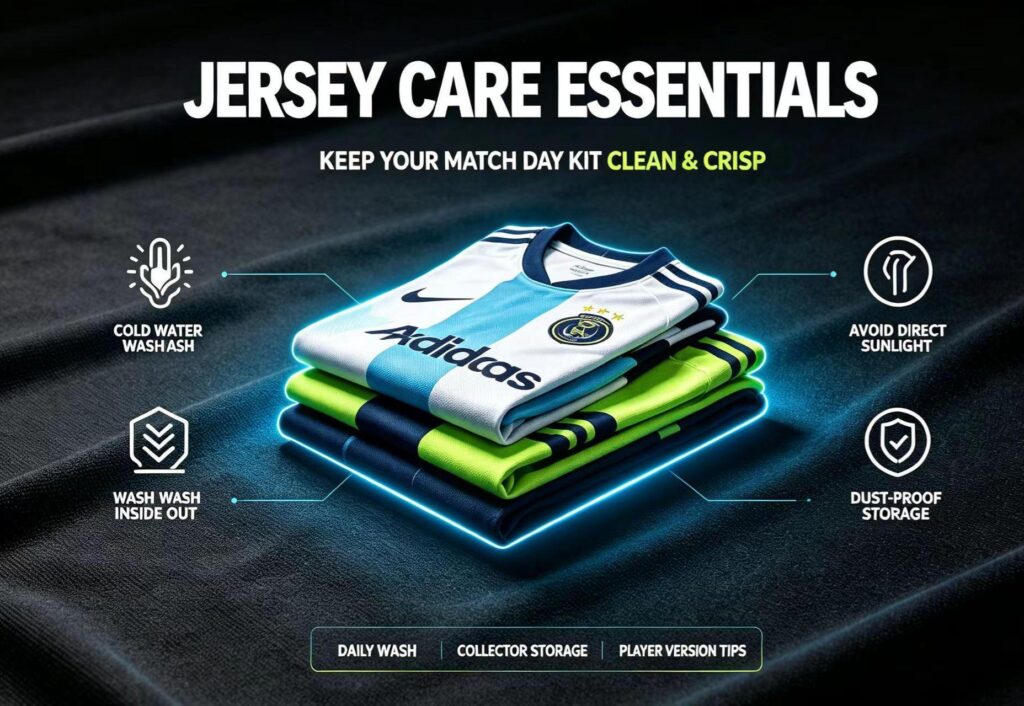


A soccer jersey takes a beating — sweat, grass stains, tackles, sun, and the washing machine all chip away at it a little more every week. Most players never think about jersey care until the colors start fading or the print starts cracking. By then, the damage is usually done.
The good news: a few simple habits can dramatically stretch a jersey’s lifespan. Below is a practical, evidence-based guide pulled together from the fabric science, laundering advice, and storage techniques used by top care guides, uniform suppliers, and vintage jersey collectors.
Why Jersey Longevity Actually Matters
It’s easy to treat a jersey as disposable, especially with how often clubs release new kits. But the numbers tell a bigger story. A standard jersey has an average lifespan of only a few years under normal wash-and-wear conditions — yet with the right care routine, that same jersey can realistically be stretched out for well over a decade instead of being replaced every season.
The impact goes beyond your closet. Soccer’s kit-replacement culture is enormous: a large share of the jerseys players and clubs use each season are discarded once that season ends, and with well over a billion jerseys estimated to be in circulation worldwide, the waste adds up fast. Environmental researchers have found that keeping a single jersey in service for even a few extra months meaningfully cuts its footprint — reducing associated emissions, water use, and waste generation by a significant margin. So proper jersey care isn’t just about vanity or nostalgia; it’s a genuinely sustainable habit.
1. Wash It Right — Every Time
Most jersey damage doesn’t come from playing in it — it comes from washing it wrong. Modern jerseys are built almost entirely from polyester (sometimes blended with spandex or elastane for stretch), a synthetic fiber that behaves very differently from cotton.
- Cold water only. Hot water breaks down synthetic fibers, causes shrinkage, and makes colors bleed.
- Gentle or delicate cycle. A high-agitation cycle wears down the fabric and stretches the stitching over time.
- Turn it inside out. This protects printed numbers, logos, and heat-pressed graphics from rubbing against the drum or other clothing.
- Wash separately by color. Keep whites and colored jerseys apart to prevent dye transfer, especially the first few washes.
- Skip the fabric softener. Softeners coat the fibers with a residue that clogs the moisture-wicking channels built into performance fabric.
- Use a mesh laundry bag. This cuts down on friction and snagging from zippers or rough fabrics in the same load.
- Pre-treat stains immediately. Sweat and grass stains set permanently once they dry, so blot (don’t rub) and treat with a mild detergent or a diluted vinegar solution as soon as possible after the match.
- Hand wash occasionally. Swapping in a hand wash every few cycles instead of a machine wash reduces mechanical stress and helps the jersey hold its shape longer — especially for authentic or specialty kits with intricate details.
2. Never Put It in the Dryer
If there’s one rule that shows up across nearly every jersey-care source, it’s this one: heat is the enemy. Dryers subject polyester to prolonged high heat, which makes the fabric brittle, distorts the moisture-wicking weave, and can permanently damage adhesive-backed numbers, names, and logos — even on a low-heat setting.
Instead, hang the jersey up (or lay it flat) to air dry indoors. Avoid drying it on an outdoor clothesline too, since that trades one problem (heat) for another (UV exposure).
3. Protect It From the Sun
UV light is a slower but equally destructive threat. Direct sunlight fades dyes, yellows white fabric, and gradually weakens fiber structure — the same mechanism that causes vintage jerseys to look “washed out” after years on display. Whether you’re drying a jersey, hanging it for storage, or displaying a framed shirt, keep it out of direct sun. If display is the goal, look for UV-protective glass or frames.
4. Store It the Right Way
How a jersey spends its downtime matters almost as much as how it’s washed.
- Use a proper hanger. A padded or wide-shouldered hanger prevents the stretching and shoulder “dimples” that come from cheap wire hangers or long-term hanging.
- Fold for long-term storage. If a jersey is going into storage for an extended period (like an off-season), folding it flat with acid-free tissue paper between layers prevents dye transfer and shoulder distortion better than months on a hanger.
- Keep it cool and dry. Avoid garages, attics, or basements where heat and humidity fluctuate — both accelerate fabric breakdown and can encourage mildew.
- Use breathable storage. A cotton garment bag or breathable box protects against dust while still letting the fabric breathe; airtight plastic containers can trap moisture.
5. Build Habits That Reduce Wear Over Time
A few small routine changes go a long way:
- Wash promptly, not excessively. Clean the jersey after every match or hard training session to stop sweat and dirt from breaking down the fibers — but for light, casual wear, you can stretch washes out a bit longer to avoid unnecessary agitation.
- Rotate jerseys if you can. Players and collectors with a second jersey in rotation put roughly half the wear-and-tear on each one, extending both lifespans.
- Check the condition regularly. Watch for early warning signs — pilling, fading, or stretched stitching — and adjust your care routine (gentler detergent, less sun exposure) before the damage becomes permanent.
The Bottom Line
Making a soccer jersey last longer isn’t complicated — it’s mostly about avoiding the few things that do the most damage: heat, direct sun, harsh detergents, and rough handling in the wash. Cold water, a gentle cycle, air drying, and smart storage are the foundation of every long-lasting jersey, whether it’s a matchday kit that sees weekly wear or a retro shirt headed for a display case. Given how much waste the sport’s replica-kit culture generates each year, treating your jersey as something to preserve — not replace — is one of the easiest sustainable habits a soccer fan can adopt.
How to Make Soccer Jerseys Last Longer: A Complete Guide to Extending the Life of Your Kit
A soccer jersey takes a beating — sweat, grass stains, tackles, sun, and the washing machine all chip away at it a little more every week. Most players never think about jersey care until the colors start fading or the print starts cracking. By then, the damage is usually done.
The good news: a few simple habits can dramatically stretch a jersey’s lifespan. Below is a practical, evidence-based guide pulled together from the fabric science, laundering advice, and storage techniques used by top care guides, uniform suppliers, and vintage jersey collectors.
Why Jersey Longevity Actually Matters
It’s easy to treat a jersey as disposable, especially with how often clubs release new kits. But the numbers tell a bigger story. A standard jersey has an average lifespan of only a few years under normal wash-and-wear conditions — yet with the right care routine, that same jersey can realistically be stretched out for well over a decade instead of being replaced every season.
The impact goes beyond your closet. Soccer’s kit-replacement culture is enormous: a large share of the jerseys players and clubs use each season are discarded once that season ends, and with well over a billion jerseys estimated to be in circulation worldwide, the waste adds up fast. Environmental researchers have found that keeping a single jersey in service for even a few extra months meaningfully cuts its footprint — reducing associated emissions, water use, and waste generation by a significant margin. So proper jersey care isn’t just about vanity or nostalgia; it’s a genuinely sustainable habit.
1. Wash It Right — Every Time
Most jersey damage doesn’t come from playing in it — it comes from washing it wrong. Modern jerseys are built almost entirely from polyester (sometimes blended with spandex or elastane for stretch), a synthetic fiber that behaves very differently from cotton.
- Cold water only. Hot water breaks down synthetic fibers, causes shrinkage, and makes colors bleed.
- Gentle or delicate cycle. A high-agitation cycle wears down the fabric and stretches the stitching over time.
- Turn it inside out. This protects printed numbers, logos, and heat-pressed graphics from rubbing against the drum or other clothing.
- Wash separately by color. Keep whites and colored jerseys apart to prevent dye transfer, especially the first few washes.
- Skip the fabric softener. Softeners coat the fibers with a residue that clogs the moisture-wicking channels built into performance fabric.
- Use a mesh laundry bag. This cuts down on friction and snagging from zippers or rough fabrics in the same load.
- Pre-treat stains immediately. Sweat and grass stains set permanently once they dry, so blot (don’t rub) and treat with a mild detergent or a diluted vinegar solution as soon as possible after the match.
- Hand wash occasionally. Swapping in a hand wash every few cycles instead of a machine wash reduces mechanical stress and helps the jersey hold its shape longer — especially for authentic or specialty kits with intricate details.
2. Never Put It in the Dryer
If there’s one rule that shows up across nearly every jersey-care source, it’s this one: heat is the enemy. Dryers subject polyester to prolonged high heat, which makes the fabric brittle, distorts the moisture-wicking weave, and can permanently damage adhesive-backed numbers, names, and logos — even on a low-heat setting.
Instead, hang the jersey up (or lay it flat) to air dry indoors. Avoid drying it on an outdoor clothesline too, since that trades one problem (heat) for another (UV exposure).
3. Protect It From the Sun
UV light is a slower but equally destructive threat. Direct sunlight fades dyes, yellows white fabric, and gradually weakens fiber structure — the same mechanism that causes vintage jerseys to look “washed out” after years on display. Whether you’re drying a jersey, hanging it for storage, or displaying a framed shirt, keep it out of direct sun. If display is the goal, look for UV-protective glass or frames.
4. Store It the Right Way
How a jersey spends its downtime matters almost as much as how it’s washed.
- Use a proper hanger. A padded or wide-shouldered hanger prevents the stretching and shoulder “dimples” that come from cheap wire hangers or long-term hanging.
- Fold for long-term storage. If a jersey is going into storage for an extended period (like an off-season), folding it flat with acid-free tissue paper between layers prevents dye transfer and shoulder distortion better than months on a hanger.
- Keep it cool and dry. Avoid garages, attics, or basements where heat and humidity fluctuate — both accelerate fabric breakdown and can encourage mildew.
- Use breathable storage. A cotton garment bag or breathable box protects against dust while still letting the fabric breathe; airtight plastic containers can trap moisture.
5. Build Habits That Reduce Wear Over Time
A few small routine changes go a long way:
- Wash promptly, not excessively. Clean the jersey after every match or hard training session to stop sweat and dirt from breaking down the fibers — but for light, casual wear, you can stretch washes out a bit longer to avoid unnecessary agitation.
- Rotate jerseys if you can. Players and collectors with a second jersey in rotation put roughly half the wear-and-tear on each one, extending both lifespans.
- Check the condition regularly. Watch for early warning signs — pilling, fading, or stretched stitching — and adjust your care routine (gentler detergent, less sun exposure) before the damage becomes permanent.
The Bottom Line
Making a soccer jersey last longer isn’t complicated — it’s mostly about avoiding the few things that do the most damage: heat, direct sun, harsh detergents, and rough handling in the wash. Cold water, a gentle cycle, air drying, and smart storage are the foundation of every long-lasting jersey, whether it’s a matchday kit that sees weekly wear or a retro shirt headed for a display case. Given how much waste the sport’s replica-kit culture generates each year, treating your jersey as something to preserve — not replace — is one of the easiest sustainable habits a soccer fan can adopt.