
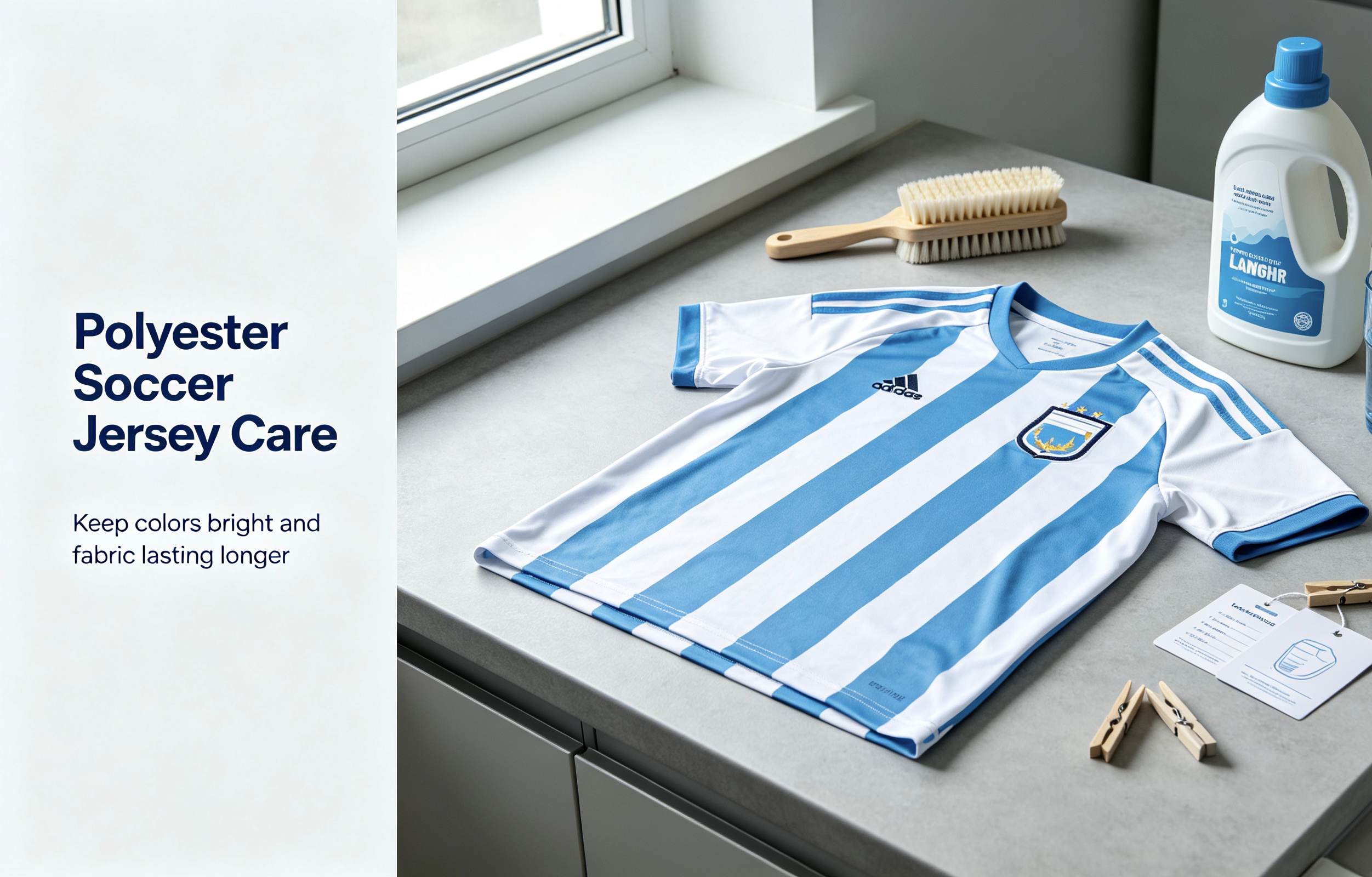
Polyester has become the standard fabric for soccer jerseys — from grassroots club kits to professional match shirts — because it wicks moisture, dries fast, resists shrinking, and holds its color better than natural fibers like cotton or wool. But that same synthetic structure means polyester jerseys need a specific care routine. Wash them the wrong way and you risk trapped odor, cracked prints, faded colors, or a warped fit.
Below is a complete care guide built from the most common advice across top-ranking sources on polyester jersey care — including fabric care experts, jersey manufacturers, and appliance makers.
Why Polyester Needs Special Care
Polyester jerseys are engineered for performance: the fibers are designed to pull sweat away from the skin, allow airflow, and dry quickly after a match. That construction is also why the fabric behaves differently in the wash than cotton does. Residue from fabric softener, high heat, or harsh detergents can clog the tiny channels that make the moisture-wicking technology work, effectively undoing the fabric’s main selling point.
Step-by-Step Washing Instructions
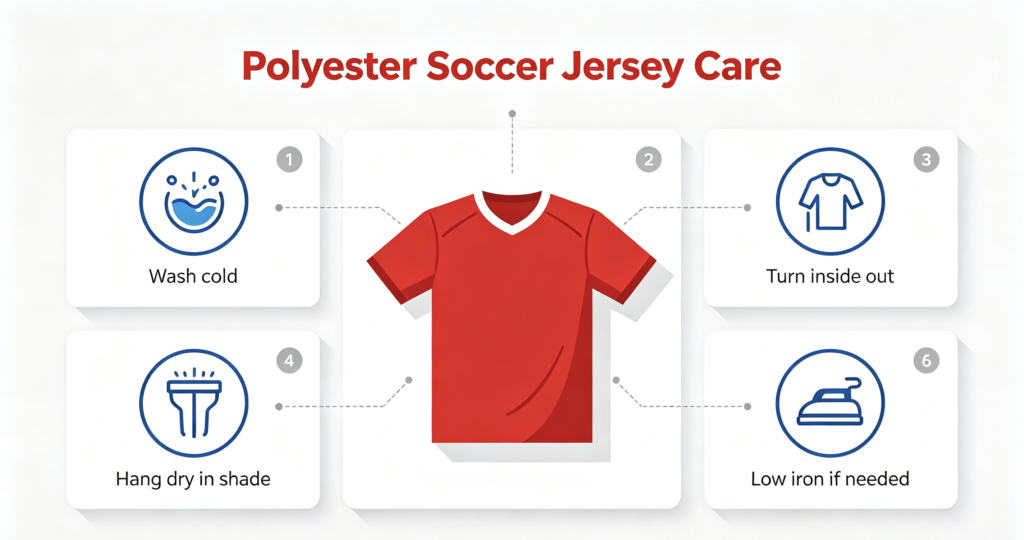
- Turn the jersey inside out. This protects screen-printed logos, sponsor graphics, and heat-transferred numbers from friction against the washing machine drum or other garments.
- Use a mesh laundry bag if you’re washing with other clothes. This reduces rubbing on crests, patches, and prints.
- Wash on a cold, gentle cycle. Cold water protects the fibers and prevents shrinkage; a gentle cycle limits stress on the fabric and any heat-pressed details.
- Use a small amount of mild liquid detergent. Too much detergent can leave residue in the fibers, which interferes with moisture-wicking.
- Skip the fabric softener entirely. Softener coats polyester fibers, blocking the wicking channels and reducing the grip of heat-transfer numbers and logos.
- Avoid bleach, even color-safe versions — it can fade dark jerseys and yellow light ones.
- Air dry only. Never put a polyester jersey in the dryer. Heat can melt or warp the synthetic fibers, shrink the garment, and cause printed logos or numbers to crack or peel.
- Dry away from direct sunlight. UV exposure fades colors over time, so hang the jersey in a shaded, well-ventilated spot.
Handling Stains and Odor
Grass stains, mud, and sweat are part of the game. A few extra steps help:
- Pre-soak immediately after a match. Soaking in cold water with a small amount of detergent for a few minutes helps loosen dirt and break down sweat before the full wash.
- Scrape off solid residue (like dried grass or mud) with a butter knife or soft brush before treating the stain, working in a circular motion so you don’t spread it further.
- Use vinegar for stubborn odor. A small amount of white vinegar added to the wash can help neutralize the bacteria that cause lingering “pit stain” smell.
- Treat custom name-and-number prints carefully, since these are usually heat-transferred and sit on top of the fabric rather than woven in — they’re more vulnerable to peeling from heat or friction than the jersey itself.
Authentic vs. Replica Jerseys
Not every polyester jersey should be machine washed. Authentic match-issue jerseys, limited-edition or commemorative kits, and shirts with intricate heat-pressed or sewn-on details are generally safer to hand wash, since this gives you more control and reduces stress on delicate elements. Standard replica jerseys and training tops made from sturdier polyester are usually fine in the washing machine as long as you follow the steps above.
Can You Shrink a Polyester Jersey to Fix the Fit?
If a jersey runs too big, don’t reach for boiling water or a high-heat dryer — polyester can melt or warp at high temperatures. Realistically, heat-based methods only tighten a modern polyester jersey by about 2–5%, and the risk to prints, numbers, and sponsor logos is significant. If a jersey is more than half a size too large, tailoring or an exchange is a more reliable fix than attempting to shrink it at home.
Quick Reference: Do’s and Don’ts
| Do | Don’t |
|---|---|
| Turn inside out before washing | Use the dryer, even on low heat |
| Wash cold, gentle cycle | Use fabric softener |
| Use mild detergent, small amount | Use bleach |
| Air dry in shade | Dry in direct sunlight |
| Pre-soak after matches | Iron directly on logos or numbers |
| Hand wash delicate/authentic kits | Mix with jeans, hoodies, or zippered items |
Storage Tips
Once dry, hang your jersey rather than folding it repeatedly, which helps prevent long-term creasing. Store it in a cool, dry place away from direct sunlight and fluorescent light to prevent yellowing or mildew, and keep it separate from garments with zippers or rough textures that could snag the fibers or scuff printed graphics.
Following these steps consistently — cold water, gentle cycle, no dryer, no softener — is the single biggest factor in keeping a polyester soccer jersey’s color, fit, and printed details intact over years of wear.