
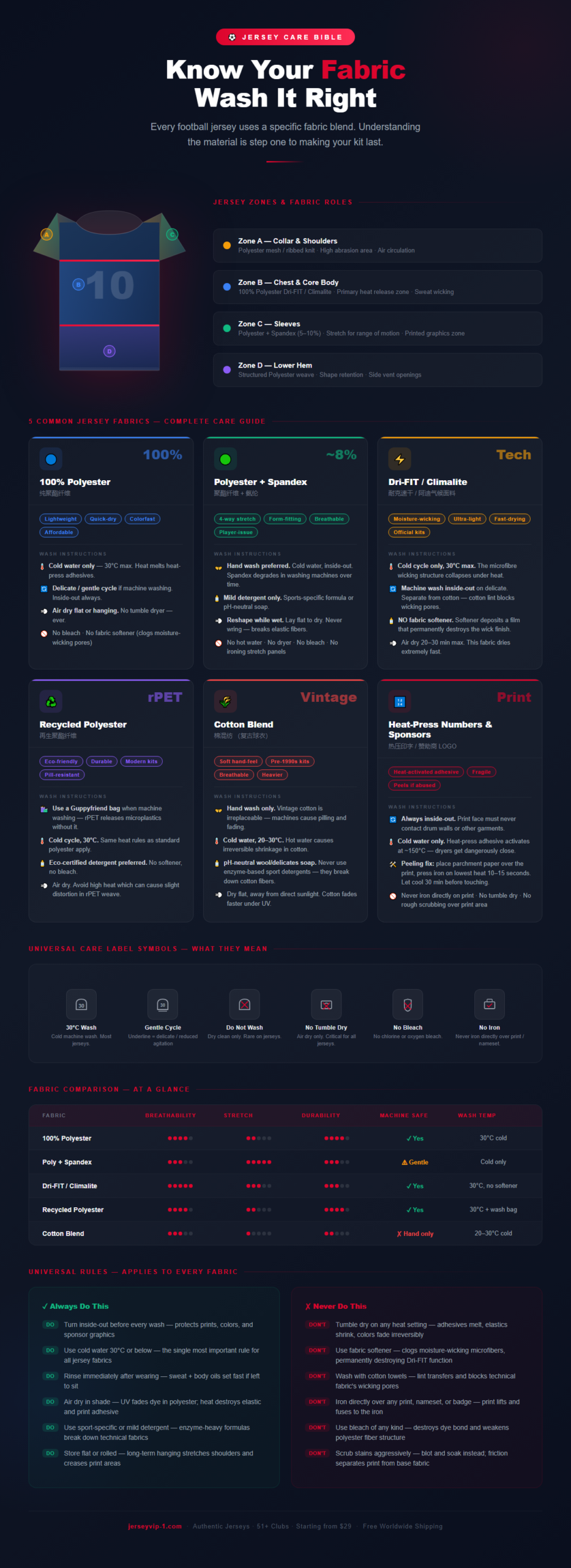
Cold water. Inside out. Air dry. That’s 90% of it. Here’s the other 10%.
THIS GUIDE EXISTS BECAUSE JERSEYS KEEP GETTING RUINED
Nearly every fan owns at least one football shirt. At some point, something gets spilled on it. It has to be washed.
The problem? Most people toss it in with their regular laundry. Same cycle. Same detergent. Same dryer. A few washes later, the sponsor is peeling. The name is cracked. Colors look dull.
Tens of thousands of people search “how to fix peeling sponsor” every single month. Hundreds of thousands search “how to wash a jersey.” The damage is real. The good news: every single problem is preventable. Most are fixable too.
This guide pulls together the best advice from kit room professionals, sports retailers, and experienced collectors. No filler. Just what works.
WHY JERSEYS NEED SPECIAL CARE
Modern football shirts are not normal clothing. They are performance garments. Here is what makes them different:
The fabric is 100% polyester — lightweight, breathable, but sensitive to heat
Sponsors, names, and numbers are heat-transfer vinyl (PU or PVC film)
The adhesive on those prints is a hot-melt glue — activated at 150-160°C in the factory
That same adhesive weakens every time it meets hot water or a dryer
Badges and league patches are heat-pressed the same way
When you wash a jersey like a t-shirt, you are slowly melting the glue that holds everything together. The fabric pills. The prints crack. It happens faster than you think.
-> Factory bond temperature: 150°C. A household dryer and hot wash both approach this threshold. That’s why jerseys fail.
7 MISTAKES THAT DESTROY FOOTBALL JERSEYS
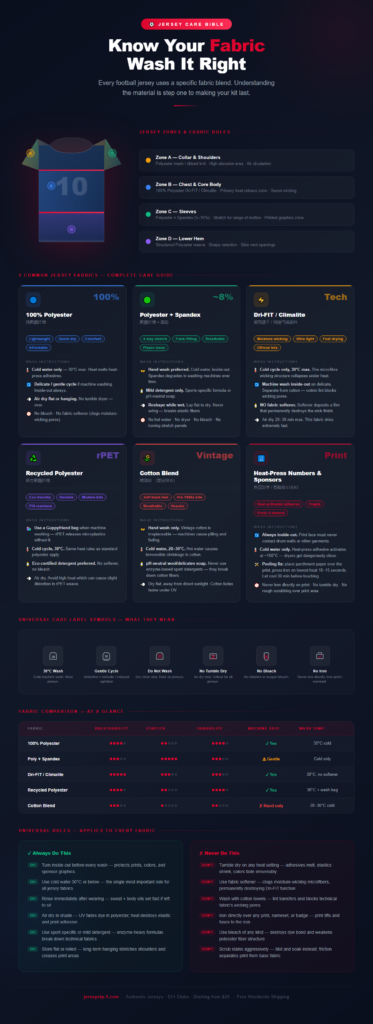
Mistake #1: HOT WATER
PROBLEM: Hot water breaks down the adhesive on sponsors, namesets, and badges. It weakens polyester fibers. It sets protein-based stains like grass and blood. It fades colors. According to WorldSoccerShop and AuthoritySoccer, this is the single biggest cause of jersey damage.
FIX: Always use cold water. Keep it under 30°C (86°F). Cold water cleans just as effectively. It protects the adhesive. It prevents color bleeding. There are zero downsides. There is no exception to this rule.
Mistake #2: THE TUMBLE DRYER
PROBLEM: ProKitLocker calls the dryer “the ultimate enemy of the football shirt.” Heat re-melts the print adhesive. Sponsor logos curl. Namesets crack. Fabric deforms. Friction rubs prints against the drum.
FIX: Hang dry only. Not on a radiator. Not in direct sunlight. Not even on the lowest dryer setting. Shaded area with good airflow. It dries in a few hours. Prints stay intact. Shape is preserved.
Mistake #3: BLEACH AND FABRIC SOFTENER
PROBLEM: Chlorine bleach destroys polyester. It does not whiten — it turns white panels yellow. It weakens fibers. Fabric softener clogs breathable mesh, traps moisture, and dulls colors.
FIX: Mild, bleach-free detergent only. Powder dissolves better than liquid for polyester. Sports-specific detergents (like Vapor Fresh) handle sweat, grass, and odor without damaging synthetics.
Mistake #4: WASHING WITH TOWELS AND ZIPPERS
PROBLEM: Towels create heavy friction. Zippers catch fabric. Jeans are abrasive. Prints take the damage. Fabric pills. Stitching loosens.
FIX: Wash jerseys separately. Or with other jerseys only. Match colors. Nothing with zippers. Nothing rough. One extra load saves your entire collection.
Mistake #5: NOT TURNING IT INSIDE OUT
PROBLEM: Sponsor and nameset face the drum. Every rotation applies friction directly to the print surface. Corners lift. Edges peel.
FIX: Turn every jersey inside out. Every single time. Five seconds. Fabric — not prints — against the drum. After the cycle, turn right-side-out and shake firmly.
Mistake #6: LEAVING IT WET IN THE MACHINE
PROBLEM: According to WorldSoccerShop, this causes wrinkles and ruins patches and writing. Damp environment encourages mold. Wet fabric weight pulls on seams.
FIX: Remove immediately when the cycle ends. Hang to dry right away. If you forget and it smells musty, rewash it. Wet sitting time equals damage time.
Mistake #7: SCRUBBING STAINS AGGRESSIVELY
PROBLEM: Harsh scrubbing weakens fibers. The print around the stain lifts. The stain gets ground deeper.
FIX: Treat stains before washing. Dab — do not rub. Pre-soak in cold water with mild detergent. Diluted white vinegar (1:4) lifts stains and kills odor bacteria without damaging fabric.
THE COMPLETE WASHING METHOD — STEP BY STEP
This is the method used by kit room professionals and recommended by major jersey retailers.
TREAT STAINS FIRST. Identify what you are dealing with — grass, mud, blood, sweat. Pre-treat with the right solution. Let it sit at least 15 minutes. Dab gently. No scrubbing.
TURN THE JERSEY INSIDE OUT. Non-negotiable. Puts fabric — not prints — against the drum.
SEPARATE BY COLOR. Whites alone. Reds with darks. Lights with lights. Color bleeding is irreversible.
PRE-SOAK IF NEEDED. Heavily soiled jerseys: