
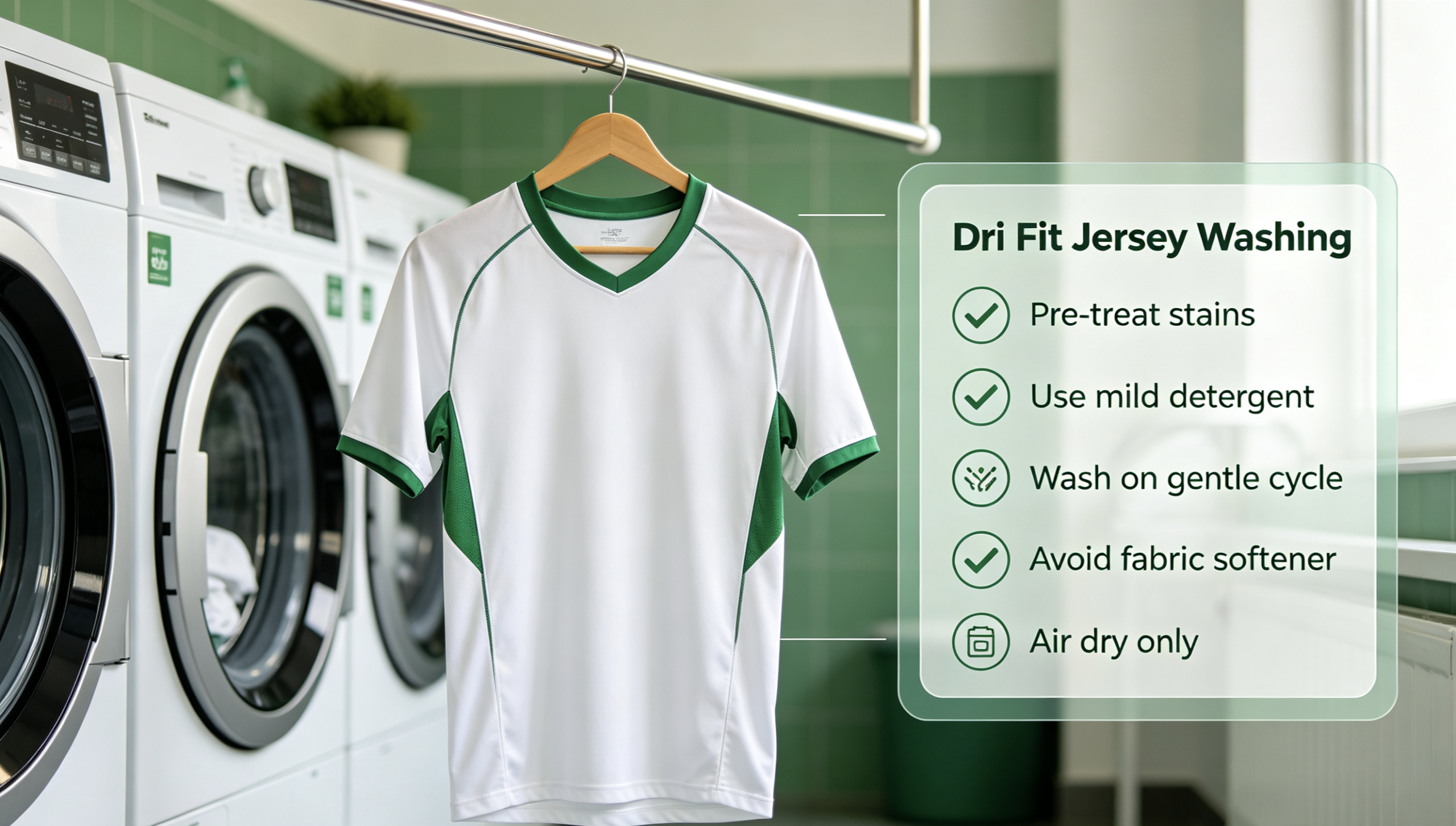
Dri-FIT and similar moisture-wicking fabrics are built to pull sweat off your skin and let it evaporate quickly, which is exactly what makes them popular for jerseys and other performance apparel. But that technology is fragile in the wash: the wrong detergent, water temperature, or drying method can quietly strip away the wicking performance long before the jersey looks worn out. Here’s a complete, evidence-based washing routine drawn from the most consistent advice across top brand guides and fabric-care sources.
Before You Wash
- Air the jersey out immediately after wearing it. Hanging it up right away limits how long sweat and bacteria sit in the fibers, which helps prevent mold, mildew, and odor buildup.
- Check the care tag first. Most performance jerseys list specific washing guidance on the inside label, and it should override generic advice when the two conflict.
- Pre-treat stains before the wash. Run the stained area under cold water for a minute or two, then apply a stain-fighting solution — a mix of hydrogen peroxide and dish soap works well on sweat and body-oil stains; use a grease-cutting solution for oily marks.
Washing Machine Steps
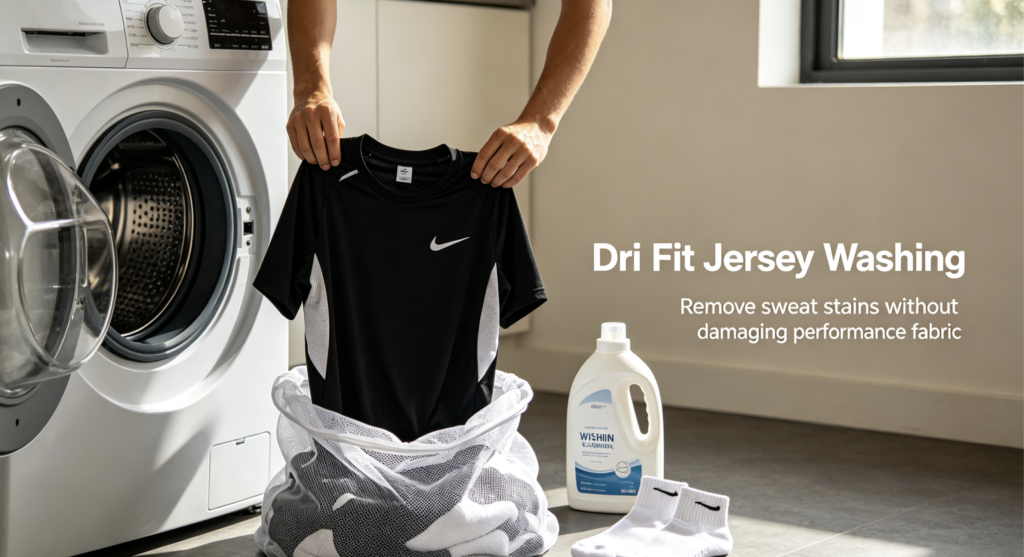
- Turn the jersey inside out to protect any printed logos, numbers, or graphics.
- Use cold water only. Cold water preserves fiber strength and elasticity; hot water breaks down the wicking fibers faster and accelerates wear.
- Select a gentle cycle. This limits mechanical stress on technical fabrics.
- Use a mild, nonabrasive detergent free of fabric softener additives. A color-safe or activewear-specific detergent is ideal; regular powdered detergent is fine, but liquid detergents with softening agents built in should be avoided.
- Skip fabric softener and dryer sheets completely. Both coat the fibers with residue, which blocks the moisture-wicking channels the fabric relies on.
- Avoid bleach. It damages both the fibers and the fabric’s color.
- Don’t wring the garment out. Press out excess water gently instead, to avoid distorting the shape.
Drying
- Air dry whenever possible. Line-drying technical fabrics is the safest option and is explicitly recommended in official team-apparel care instructions.
- If you must use a dryer, use low or no heat, and pull the garment out while still slightly damp to minimize shrinkage risk.
- High heat is the main cause of long-term damage — it reduces Dri-FIT performance, contributes to static cling, and can crack or peel printed logos and numbers over repeated cycles.
- Make sure the garment is completely dry before storing it, and store it in a cool, dry place out of direct sunlight or fluorescent light to prevent mildew or yellowing.
Washing Frequency and Habits
Wash moisture-wicking jerseys after every wear. Sweat and bacteria build up quickly in technical fabrics, and letting a jersey sit unwashed accelerates both odor and fiber breakdown. At the same time, avoid overloading a single wash cycle — technical apparel benefits from being washed separately from heavier fabrics like denim or cotton hoodies, which can pill or snag the moisture-wicking material.
Common Mistakes That Shorten a Jersey’s Life
| Mistake | Why It Hurts the Fabric |
|---|---|
| Using fabric softener | Coats fibers, blocking moisture-wicking |
| High-heat drying | Reduces wicking performance, increases static, can crack prints |
| Hot water washing | Weakens fibers faster than cold water |
| Bleach | Damages fibers and fades color |
| Wringing out water | Distorts fit and shape |
| Ironing directly on logos | Can melt heat-transferred prints |
Quick FAQ
Can Dri-FIT jerseys go in the dryer? It’s safer to air dry, but if needed, use the lowest heat setting and remove the jersey while still slightly damp.
Do I need a special detergent? A mild, activewear-formulated detergent works best; the key is avoiding softeners and harsh additives rather than needing a specific brand.
Why does my Dri-FIT shirt smell bad even after washing? Fabric softener residue or hot-water washing can both damage the wicking fibers, causing the shirt to trap sweat instead of moving it away — which shows up as lingering odor.
The core routine that shows up consistently across brand and fabric-care guidance is simple: cold water, gentle cycle, mild detergent, no softener, air dry. Sticking to it is what keeps moisture-wicking performance — and the jersey itself — intact over time.