
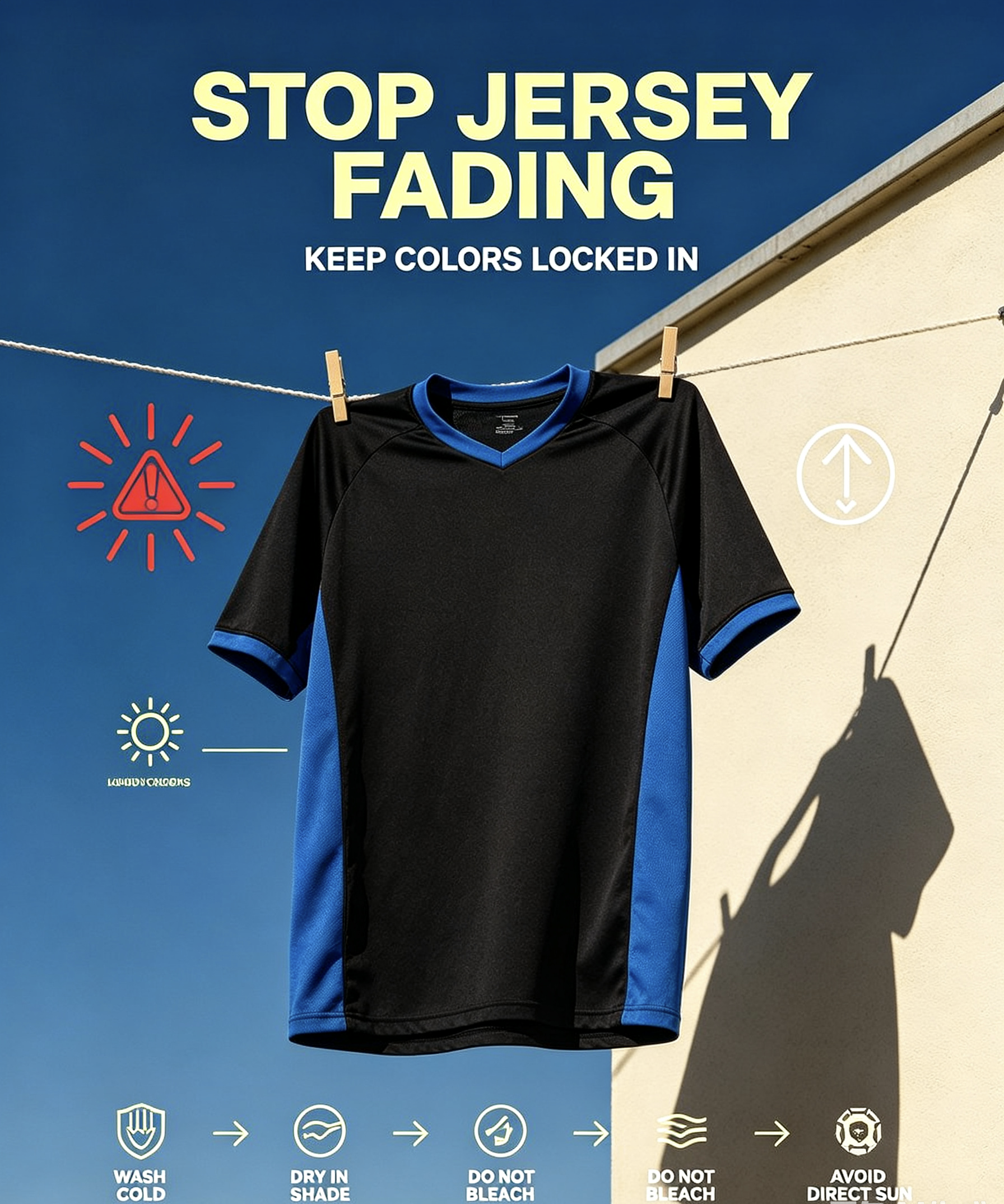
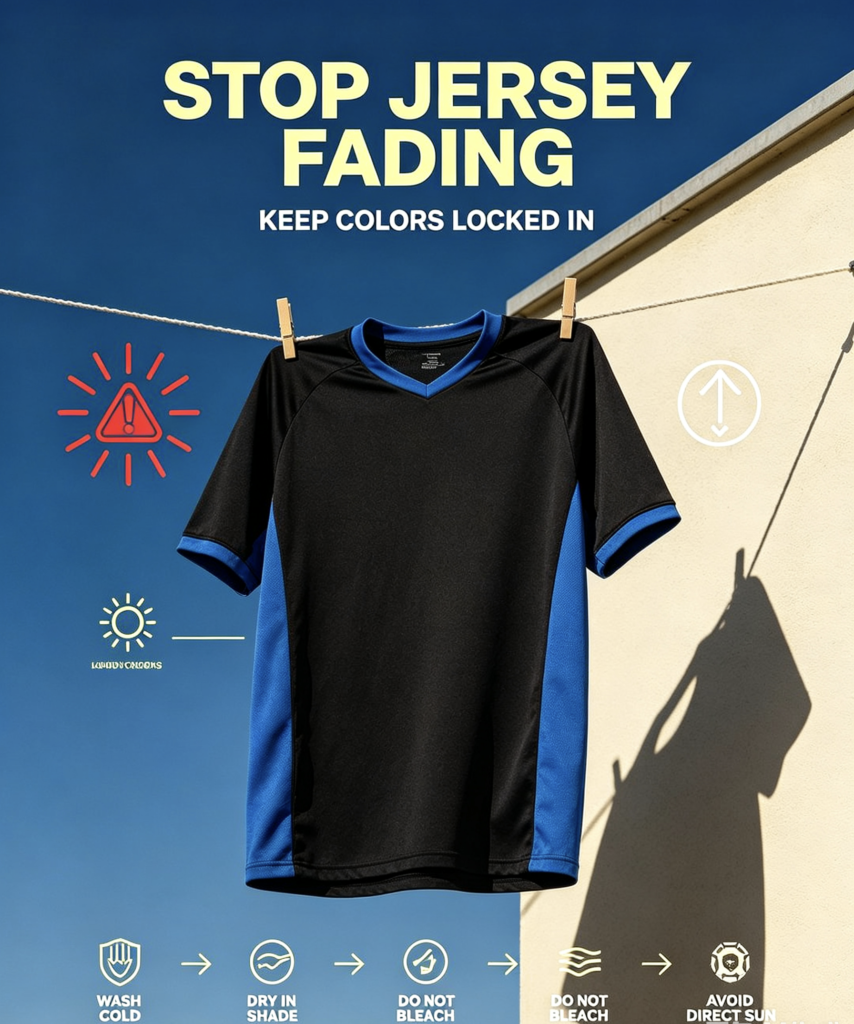
Nothing kills the look of a favorite jersey faster than dull, washed-out colors. After reviewing the top-ranking guides on jersey fading prevention, a few causes and fixes come up again and again. Here’s what actually works.
Why Jerseys Fade in the First Place
Three culprits are responsible for almost all color loss:
- UV exposure — Sunlight’s ultraviolet rays break down the chemical bonds in fabric dye over time, which is why jerseys dried or stored in direct light fade fastest.
- Hot water — Heat opens up fabric fibers and weakens the bond between dye and fabric, accelerating color loss with every wash.
- Harsh detergents and bleach — Strong chemicals strip color and degrade prints, numbers, and logos.
- Friction — Rubbing against zippers, rough fabrics, or the inside of a washing machine drum wears down both color and printed graphics.
- Over-washing — Washing more often than necessary breaks down fibers and fades colors faster, even when done “correctly.”
Washing: The First Line of Defense
- Always use cold water. Hot water is the single biggest accelerant of fading and fiber damage across virtually every source reviewed.
- Turn the jersey inside out. This protects printed logos, names, and numbers from direct friction against the washer drum.
- Use a gentle or delicate cycle. Aggressive agitation stresses both fabric and prints.
- Choose a mild detergent made for delicates or sportswear, and skip fabric softener — it coats fibers and can reduce moisture-wicking performance.
- Skip the bleach entirely. It’s one of the fastest ways to strip color and damage fibers.
- Sort by color. Wash dark and light jerseys separately to avoid dye transfer.
- Wash less often. Only wash when the jersey is actually dirty or smells — spot-cleaning minor marks extends time between full washes.
Drying: Where Most of the Damage Happens
Heat from a tumble dryer is one of the fastest ways to fade colors and crack printed graphics. Air drying is the near-universal recommendation:
- Hang or lay the jersey flat to dry rather than using a dryer.
- Keep it out of direct sunlight while drying — UV exposure fades colors even faster when the fabric is wet.
- If a dryer is unavoidable, use the lowest heat setting and remove the jersey while still slightly damp.
Storage Matters More Than People Think
Fading doesn’t stop once the jersey is clean and dry — poor storage keeps the damage going:
- Store jerseys in a cool, dark, dry place away from windows and direct light.
- Use padded or wide-shouldered hangers to prevent stretching, or fold and store in a breathable cotton or garment bag.
- Avoid damp basements or hot attics — temperature swings and humidity degrade both fabric and color.
- For long-term or display storage, UV-filtering glass or acrylic can shield framed jerseys from light damage indefinitely.
Quick Reference: Do’s and Don’ts
| Do | Don’t |
|---|---|
| Wash in cold water | Use hot water |
| Turn inside out before washing | Wash right-side out |
| Air dry away from sunlight | Tumble dry on high heat |
| Use mild, color-safe detergent | Use bleach or harsh chemicals |
| Store in a cool, dark place | Store in direct sunlight or damp areas |
| Wash only when needed | Over-wash after every light use |
The Bottom Line
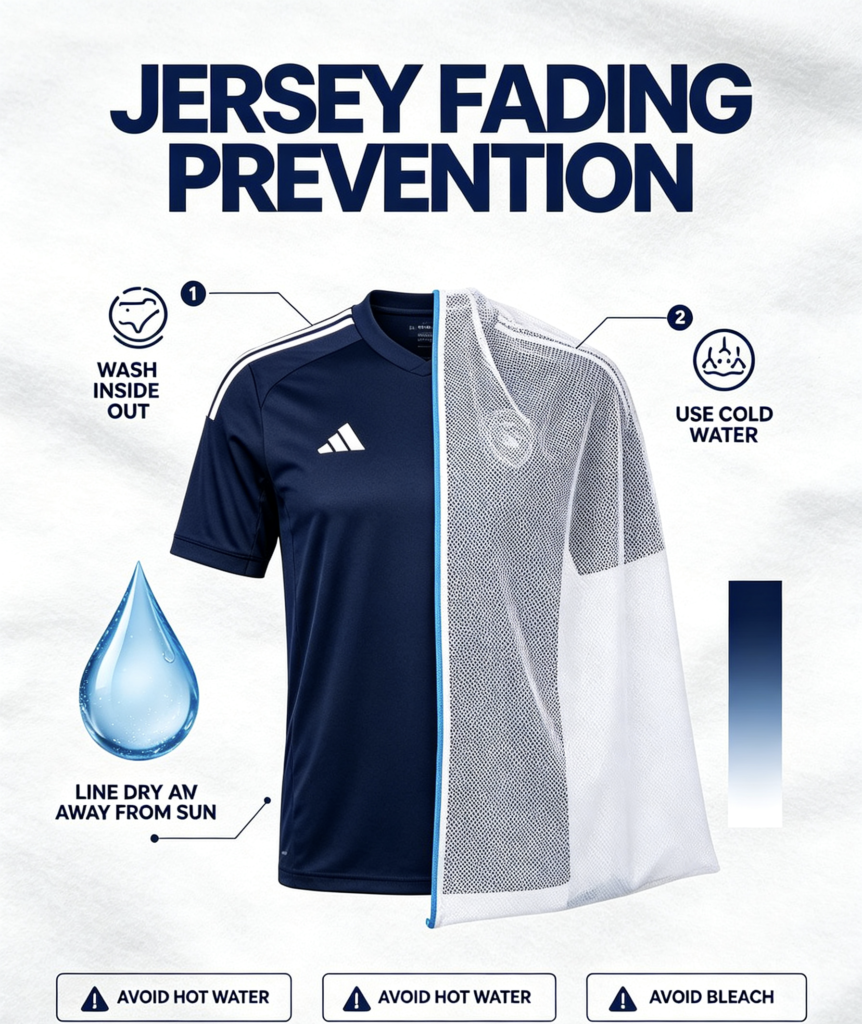
Fading is almost always the result of heat, light, or aggressive chemicals — and every one of those is controllable. Cold water, inside-out washing, air drying away from the sun, and smart storage will keep a jersey’s colors looking close to day-one for years.