
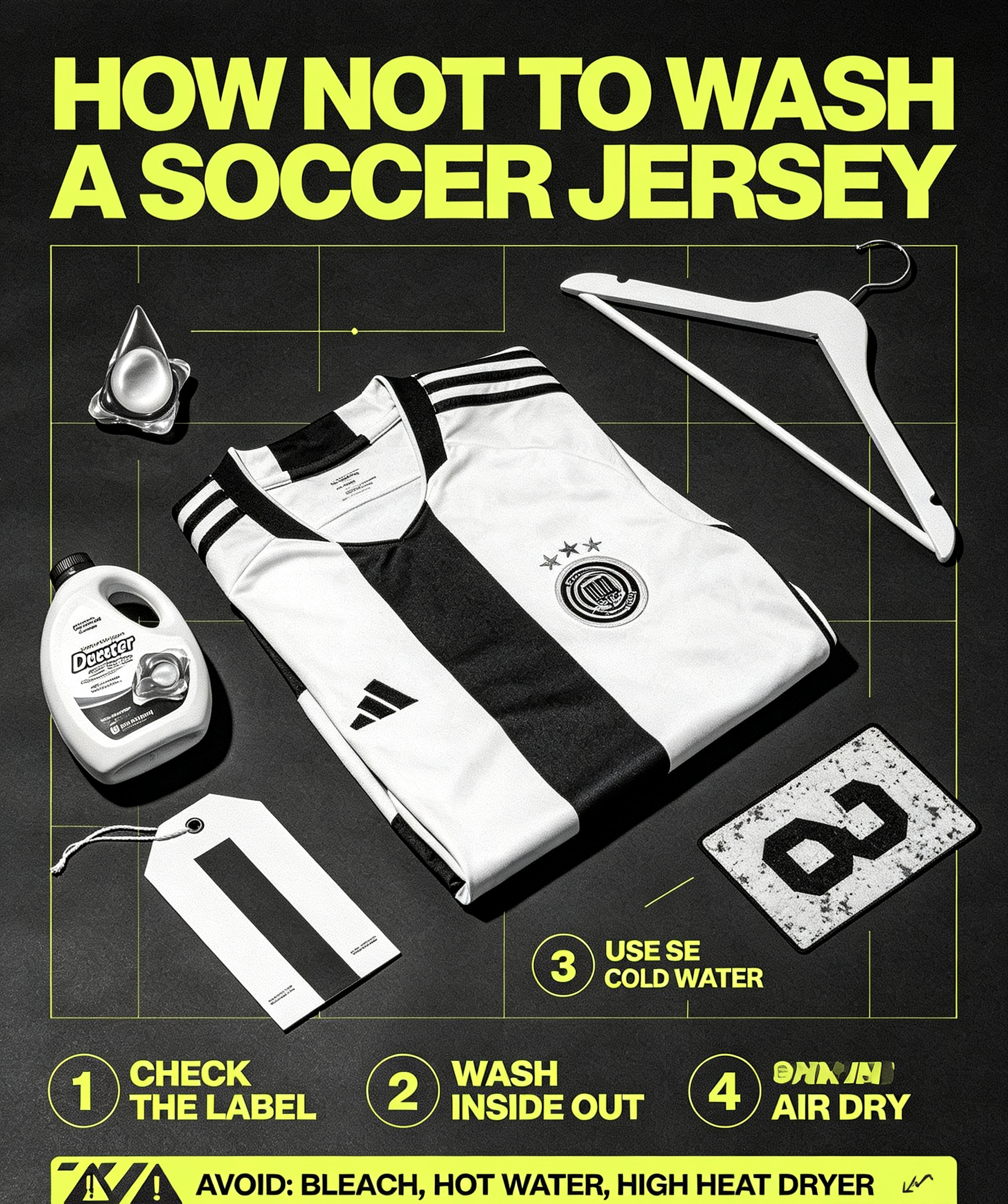
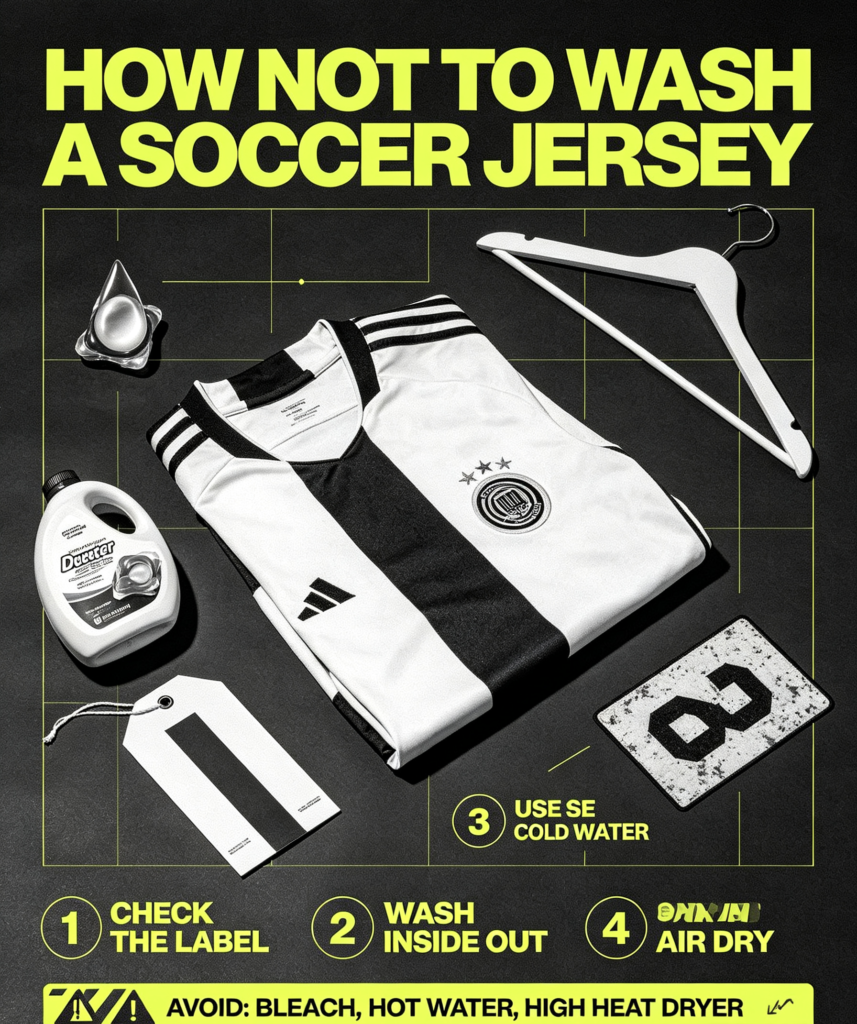
If you’ve ever pulled a jersey out of the wash only to find a cracked crest, a shrunk collar, or colors that look nothing like they used to, you’re not alone. After reviewing the top-ranking guides currently published on this topic, a clear pattern emerges: almost every ruined jersey traces back to one of a handful of avoidable mistakes. Here’s what the most-cited sources agree on — and where they disagree.
The #1 Mistake: The Dryer
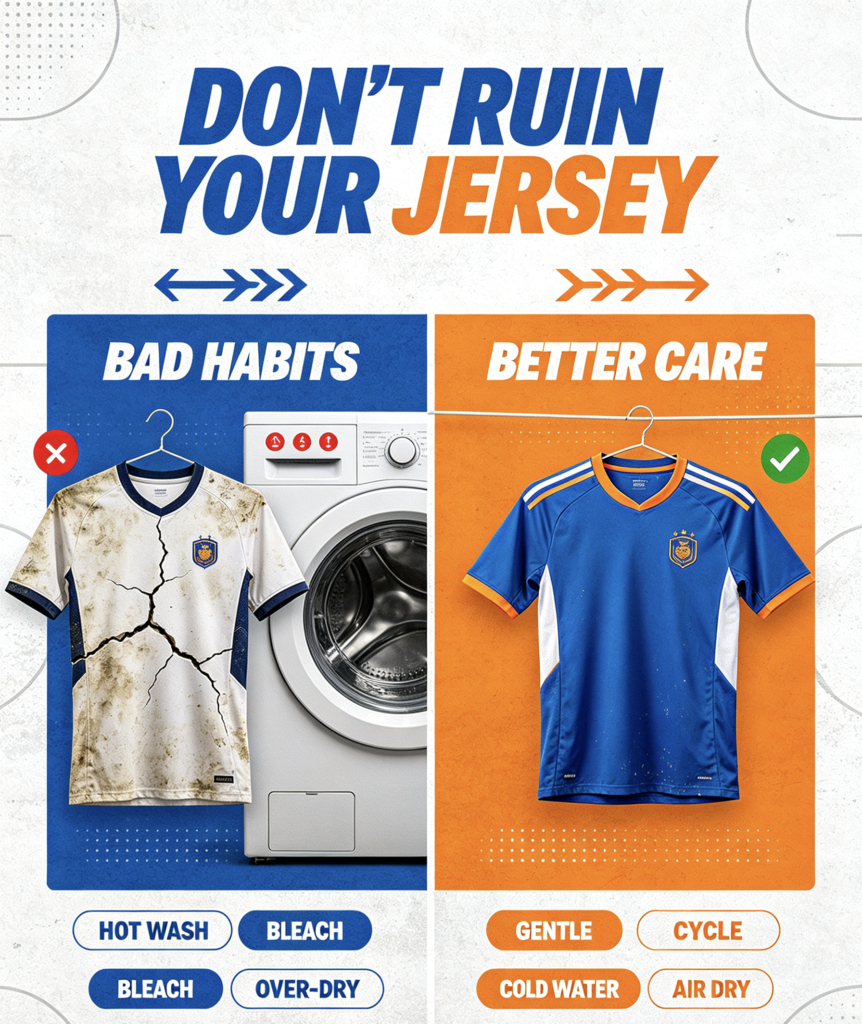
Nearly every top-ranking article singles out the tumble dryer as the single most damaging thing you can do to a jersey. Heat softens the adhesive behind screen-printed numbers, sponsor logos, and heat-transfer graphics, causing them to crack and peel over time. It also shrinks and warps polyester and polyester-blend fabric, which is what almost all modern jerseys are made from. Several guides note that even one high-heat cycle can start irreversible damage that compounds with every wash after.
The fix: air dry only. Lay the jersey flat on a towel or mesh rack, or hang it on a wide, padded hanger — wire hangers can stretch the shoulder seams over time. Dry it in the shade rather than direct sun, since UV exposure can fade colors over the long run.
Mistake #2: Hot Water
The second most common thread across every article is water temperature. Hot water is repeatedly flagged as a cause of shrinkage, color fade, and fiber breakdown. Cold water, by contrast, cleans just as effectively for sweat and everyday dirt without stressing the fabric.
The one interesting exception several guides call out: blood stains. Multiple sources specifically warn that hot water sets blood permanently into fabric fibers, so blood stains should always be treated with cold water only, never warm or hot.
Mistake #3: Skipping the Care Label
More than one guide describes the small care tag sewn into the side seam as the single most-skipped step in the entire process — and the main reason jerseys get permanently damaged. A lightweight sublimation-printed jersey and a heavier tackle-twill jersey don’t behave the same way in a wash, and manufacturers build the label around the specific fabric and print method used. When general advice and the label disagree, follow the label.
Mistake #4: Bleach, Fabric Softener, and Harsh Detergent
This is one of the most consistent points across all ten guides: skip both bleach and fabric softener entirely.
- Bleach weakens fabric structure over time and dulls vibrant colors, making the material more prone to tearing.
- Fabric softener coats the microfibers of moisture-wicking fabric, which reduces breathability — this is often the reason an older jersey starts feeling clammy or “wet on the inside” during activity.
- Heavy-duty detergents with enzymes and brighteners can bleach color even when the label doesn’t say “bleach.”
A mild, color-safe detergent formulated for athletic or delicate fabrics is the consistent recommendation. A few sources note there’s no meaningful performance difference between specialty “sports detergent” and a basic mild color detergent — the important part is avoiding harsh additives, not the brand.
Mistake #5: Washing at Full Speed, With Everything Else
Several guides point out that a normal or heavy-duty wash cycle is too aggressive for jerseys. The friction from tumbling against zippers, buttons, and rougher fabrics like denim is what actually causes cracked prints and worn lettering — not just heat or detergent. The fix, repeated across nearly every article:
- Turn the jersey inside out before washing to shield the graphics from friction.
- Use the gentle or delicate cycle.
- Wash in a mesh laundry bag, especially if there are zippers or velcro closures.
- Keep the load small — jerseys need room to move freely in the water.
- Separate dark and light jerseys, since new dark dye can bleed onto lighter fabric even in cold water.
Mistake #6: Ignoring Stains Until Laundry Day
Sweat, grass, and mud start bonding to jersey fabric almost immediately after a match, and letting a stain sit until the next wash makes it far harder to remove. The most detailed guides recommend rinsing the stained area in cold water right after taking the jersey off, then applying a mild detergent, a baking soda paste, or a sports-safe enzyme stain remover and letting it sit for 15–30 minutes before washing.
An Underrated Point: You Can Overwash — But You Can Also Underwash
One expert-sourced guide, citing a fabric care scientist at Procter & Gamble, makes a point that’s easy to miss: washing too often, too harshly, is what breaks down fibers and fades logos — not simply the frequency of washing on its own. At the same time, not washing often enough allows odor-causing bacteria to build up in the moisture-wicking fabric. The real variable isn’t “how often” but “how carefully” — gentle, cold, inside-out washing after each heavy use is the balance most sources land on.
Bonus Tip: Vinegar for Odor, Not Softness
Multiple sources recommend a cup of white vinegar in the wash (or a 30-minute soak in a vinegar-water mix) as a natural way to cut lingering odor without resorting to fabric softener, which would otherwise clog the fabric’s moisture-wicking pores. This should be used occasionally rather than every wash, since vinegar is mildly acidic.
Quick-Reference Soccer Jersey Care Checklist
- ✅ Check the care label before doing anything else
- ✅ Turn inside out
- ✅ Cold water only (yes, even for blood — especially for blood)
- ✅ Gentle/delicate cycle, small load, mesh laundry bag if there’s velcro or zippers
- ✅ Mild, bleach-free, color-safe detergent
- ✅ Pre-treat stains within a few hours, not days
- ✅ Air dry flat or on a padded hanger, in the shade
- ❌ No dryer, even on low heat, for anything with heat-pressed graphics
- ❌ No bleach
- ❌ No fabric softener
- ❌ No washing with heavy, rough fabrics like jeans
Get these right and a jersey — replica or authentic — can realistically last for years of regular wear and washing without the cracked crest, faded number, or shrunk collar that ends most jerseys early.