
One Universal Rule: Nike and Adidas Jerseys Follow the Same Care Principles
After reviewing official manufacturer recommendations and leading jersey care guides, one thing becomes clear: whether you own a Nike soccer jersey or an Adidas soccer jersey, the washing principles are nearly identical.
Across official Nike care instructions, major sporting goods retailers, and laundry experts, the same best practices appear repeatedly:
Turn the Jersey Inside Out
Almost every guide recommends washing your jersey inside out.
Doing so helps:
- Protect club crests, sponsor logos, names, and numbers from friction.
- Allow sweat, body oils, and dirt trapped inside the fabric to be cleaned more effectively.
- Reduce wear on printed graphics and stitched details.
Wash in Cold Water on a Gentle Cycle
Nike officially recommends washing performance apparel in cold water using the gentle or delicate cycle.
Cold water helps prevent:
- Fading
- Shrinking
- Damage to heat-applied names and numbers
- Premature wear of technical fabrics
The same recommendation is echoed by laundry experts and appliance manufacturers alike.
Never Use High Heat
Perhaps the most consistent warning across every guide is to avoid high temperatures.
High heat can:
- Damage polyester performance fibers
- Cause jerseys to shrink
- Crack or peel heat-pressed names and numbers
- Loosen club badges and sponsor logos
- Shorten the lifespan of moisture-wicking fabrics
Skip Fabric Softener
Nike explains that fabric softener coats synthetic fibers, making it harder for detergent to penetrate and remove sweat, bacteria, and odors.
Other experts add that fabric softener also reduces the moisture-wicking performance that modern soccer jerseys are designed to provide.
How to Wash Nike Soccer Jerseys
Combining Nike’s official recommendations with professional jersey care advice, the ideal cleaning routine for Nike Dri-FIT and Nike Vaporknit jerseys looks like this.
Before Washing
Brush away loose dirt or dried grass using a soft-bristle brush before placing the jersey in the washing machine.
Remove Odors Naturally
Many jersey care experts recommend adding ½–1 cup of white vinegar during the rinse cycle.
White vinegar helps:
- Neutralize sweat odors
- Break down body oils
- Eliminate bacteria
without leaving behind a vinegar smell.
For stubborn stains, mix equal parts white vinegar and baking soda into a paste, gently apply it with a soft brush, let it sit briefly, then wash as usual.
Machine Washing
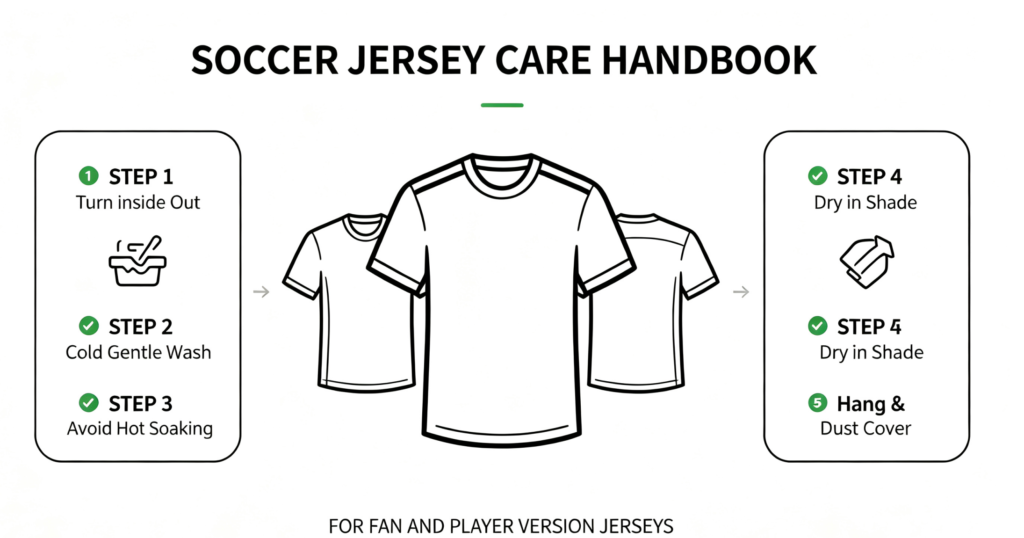
- Turn the jersey inside out.
- Wash in cold water.
- Use the gentle cycle.
- Wash separately from towels, fleece, or lint-producing fabrics to prevent pilling.
Drying
Lay the jersey flat or hang it to air dry.
Never iron directly over printed graphics, names, or club crests.
How to Care for Adidas Soccer Jerseys
The care principles for Adidas jerseys are very similar, but several guides make an important distinction between fan versions (AEROREADY) and authentic/player versions (HEAT.RDY or professional match jerseys).
Choose the Right Detergent
Many experts recommend using a detergent specifically formulated for sportswear.
For authentic Adidas jerseys, hand washing is often preferred over machine washing.
Pre-Soak Before Washing
Several professional guides suggest soaking authentic jerseys in a mixture of cold water and white vinegar for about 30 minutes before washing.
This helps loosen sweat residue and remove odors while being gentle on delicate heat-applied graphics.
Separate Light and Dark Colors
Many national team jerseys feature multiple color panels.
To prevent color bleeding:
- Wash dark jerseys separately.
- Never mix new or brightly colored jerseys with light-colored garments.
Never Use Bleach
Bleach—even color-safe bleach—can gradually damage synthetic fibers and fade printed graphics.
For long-term jersey care, it’s best to avoid bleach entirely.
Special Care for Player Version (Authentic) Jerseys
Authentic player jerseys require extra attention and are often the most delicate jerseys available.
Heat-Pressed Graphics Are More Fragile
Unlike many fan jerseys that feature embroidered badges, authentic player jerseys typically use:
- Heat-pressed club crests
- Heat-applied sponsor logos
- Lightweight heat-transferred names and numbers
These components improve comfort and reduce weight but are much more sensitive to heat, friction, and harsh washing.
Hand Washing Is Strongly Recommended
Most professional jersey care guides recommend hand washing authentic player jerseys whenever possible.
Machine washing should only be used when absolutely necessary and only on the gentlest settings.
Recommended care includes:
- Cold water
- Gentle detergent
- No fabric softener
- Minimal rubbing or wringing
- Air drying only
Premium Materials Require Premium Care
Authentic match jerseys use lighter fabrics, more advanced ventilation panels, and professional-grade construction.
Because these materials are designed for elite-level performance rather than long-term durability, they require more careful handling than standard fan jerseys.
Quick Comparison
| Care Item | Nike Fan Jersey | Adidas Fan Jersey | Authentic / Player Version Jersey |
|---|---|---|---|
| Washing Method | Machine wash (gentle cycle) | Machine wash (gentle cycle) | Hand wash recommended |
| Water Temperature | Cold water | Cold water | Cold water only |
| Club Crest Construction | Some heat-pressed | Embroidered or heat-pressed | Mostly heat-pressed |
| Odor Removal | White vinegar + baking soda | White vinegar pre-soak | Gentle white vinegar soak |
| Dryer | Never use | Never use | Never use |
| Fabric Softener | Avoid | Avoid | Never use |
Final Thoughts
Whether you own a Nike soccer jersey, an Adidas soccer jersey, or a premium player version jersey, the best care practices remain remarkably consistent.
Always:
- Wash in cold water.
- Turn the jersey inside out.
- Use a gentle wash cycle or hand wash whenever possible.
- Avoid high heat.
- Skip fabric softener.
- Air dry naturally.
The biggest difference is that authentic player jerseys use lightweight, heat-applied construction that makes them more vulnerable to heat and abrasion. They deserve extra care, including gentle hand washing whenever possible.
Finally, remember that the care label inside your jersey should always take priority. Following the manufacturer’s instructions is the safest way to preserve your jersey’s appearance, performance, and long-term value.