
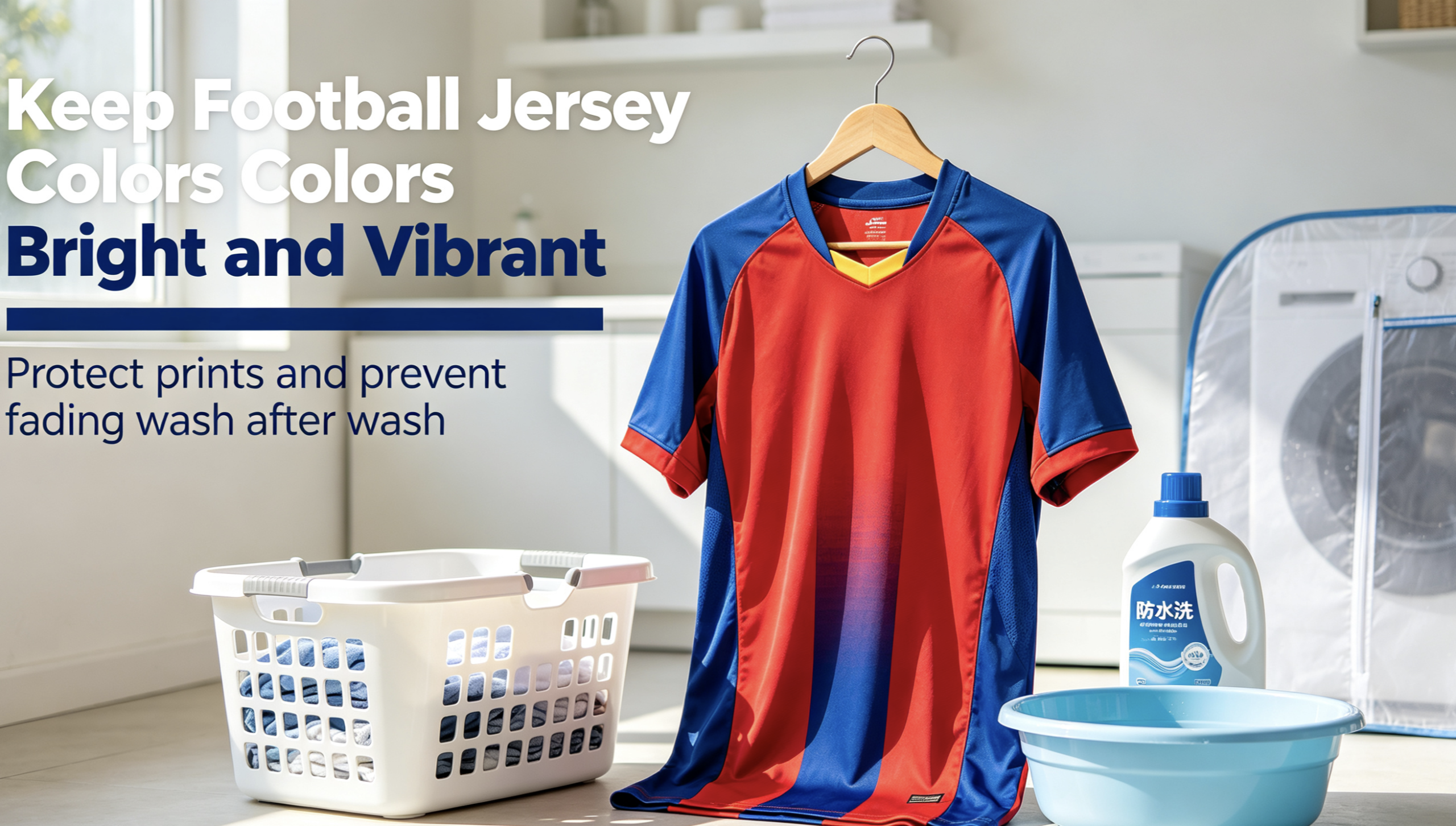
As a vintage football shirt collector with over 150 jerseys in my closet, I’ve made every single mistake in the book. I’ve watched a rare 2004 Arsenal Henry shirt lose its sponsor print in a single wash, and I’ve cringed at cracked heat-pressed namesets that looked like spiderwebs.
If you think tossing your kit into a standard wash cycle after a weekend match is “good enough,” you are slowly killing your jersey.
Modern kits aren’t just cotton t-shirts; they are highly engineered polyester garments with heat-applied vinyl, delicate patches, and breathable mesh. Today, I’m sharing my exact jersey care routine after every match, alongside the 5 critical jersey washing mistakes you need to stop making right now if you want your shirts to last a lifetime.
Part 1: My Routine — Jersey Care After Every Match
The battle to save your jersey starts the second the final whistle blows. Most people ruin their shirts before they even touch a washing machine. Here is the strict protocol I follow after every single match.
Step 1: The “No-Bag-Prison” Rule
The absolute worst thing you can do is peel off your sweat-soaked jersey, stuff it into the bottom of a dark, zippered gym bag, and leave it there overnight.
Why? Sweat contains salts, acids, and bacteria. In a sealed, damp bag, bacteria multiply within hours. Not only does this lock in a permanent sour stench, but the acid in your sweat also begins to degrade the adhesive backing on your sponsor logos.
- My rule: If you can’t wash it immediately, hang it up to air dry. Never leave it crumpled in a bag.
Step 2: Unbutton and Flip (Inside-Out)
Before the jersey goes anywhere near water, I do two things:
- Unbutton everything: If you are washing a baseball jersey or a henley-style football kit, unbutton every button. Under tension in the machine, buttonholes stretch, and plastic buttons can snap.
- Turn it inside-out: This is non-negotiable. Your jersey’s exterior has the vulnerable prints. Turning it inside-out forces the inner fabric to take the brunt of the friction, protecting your outer sponsor decals from rubbing against the washer drum.
Part 2: The 5 Jersey Washing Mistakes Ruining Your Kits
If your jerseys are peeling, fading, or losing their athletic fit, you are likely guilty of at least one of these common laundry errors.
Mistake 1: Letting the Dryer Melt Your Graphics
If you put your sports jerseys in the dryer on high heat, you are playing Russian roulette with the adhesive.
- The Reality: High heat melts the glue holding heat-pressed logos, names, and numbers. Once that bond softens, you get permanent bubbling and peeling. Furthermore, high heat warps and shrinks polyester mesh, ruining that tailored fit.
- The Fix: Always air dry. Hang your jersey on a plastic hanger (never wire, which can snag the mesh) and let it dry naturally away from direct sunlight, which can fade vibrant club colors.
Mistake 2: Using Fabric Softener (The Silent Killer)
We all want our gear to smell fresh, but liquid fabric softener is poison to modern sportswear.
- The Reality: Softeners work by leaving a thin, waxy chemical coating over the fibers to make them feel soft. For a jersey, this coating clogs the microscopic gaps in the breathable mesh. It kills the shirt’s moisture-wicking ability, trapping sweat and odors inside the fabric.
- The Fix: Use a mild liquid detergent. If you need to neutralize tough odors, add half a cup of distilled white vinegar to the rinse cycle instead.
Mistake 3: Washing at High Temperatures
I see a lot of people setting their washing machines to 50°C or 60°C to “sanitize” their gear after a muddy match.
- The Reality: Polyester is essentially plastic. High temperatures will cause spontaneous peeling of the name sets.
- The Fix: Stick to cold water (maximum 30°C). Cold water is more than enough to lift grass and dirt stains when paired with a decent detergent, and it keeps the vinyl prints perfectly safe.
Mistake 4: Skipping the Mesh Laundry Bag
Washing your jersey loose in a heavy load of laundry is a recipe for disaster. Zipper teeth from hoodies, metal buttons on jeans, and rough denim textures will snag the delicate knit of a player-issue kit.
- The Fix: Buy a cheap mesh laundry bag. Slide your inside-out jersey inside, zip it up, and wash it. This acts as a physical shield against the chaotic environment of your washing machine.
Mistake 5: Using Harsh Chlorine Bleach
Got a stubborn grass stain on your pristine white Real Madrid or England kit? Do not reach for the Clorox.
- The Reality: Chlorine bleach is too aggressive. It weakens polyester fibers over time, causes yellowing on white synthetics, and will instantly strip or fade the color from embroidered team badges.
- The Fix: Spot-treat stains with a soft-bristled toothbrush and a drop of liquid dish soap, or use a gentle, oxygen-based bleach (color-safe bleach) if a full soak is needed.
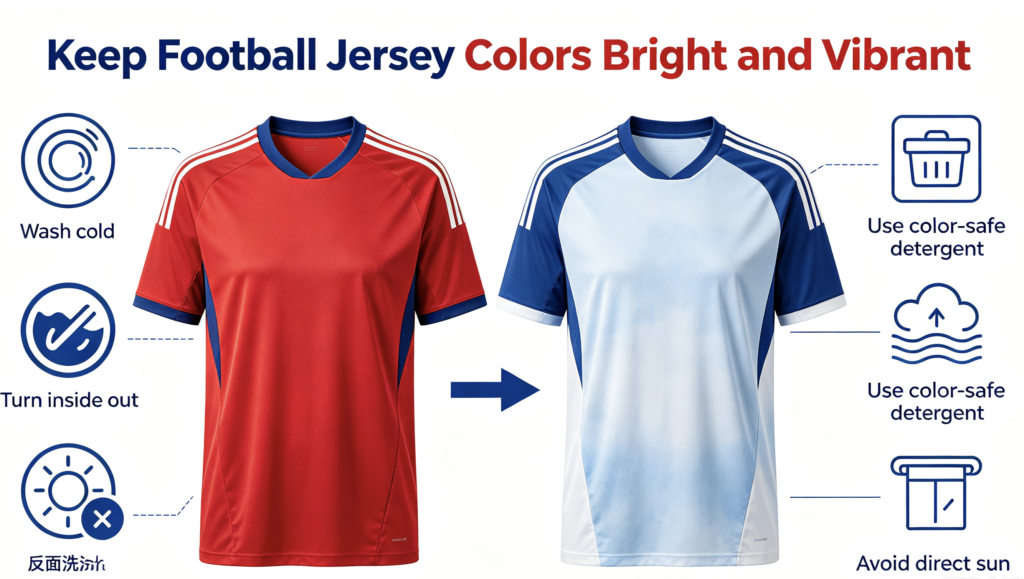
Summary: The Ultimate Jersey Care Cheat Sheet
| The Common Mistake | My Pro-Grade Solution |
| Damp Gym Bag Storage | Hang immediately to prevent bacteria buildup |
| Washing Right-Side-Out | Always flip inside-out to protect heat-pressed vinyl |
| High Heat Drying | Air dry only (hang on a plastic hanger) |
| Using Fabric Softener | Skip it entirely; use vinegar for odors |
| Hot Water Cycles | Wash in cold water (maximum 30°C) |
| Loose Machine Washing | Protect inside a mesh laundry bag |
Treat your jerseys like the premium gear they are. Avoid the heat, ditch the softeners, and give them a quick, cold, protected wash after every match. Your wallet—and your collection—will thank you.